Menu

Send money abroad:
the true cost comparison

By Permitely Editorial · Last updated October 11, 2026 · How we check this page

"Zero fee" doesn't mean zero cost. See the estimated total cost — transfer fee plus the hidden exchange-rate markup — side by side.

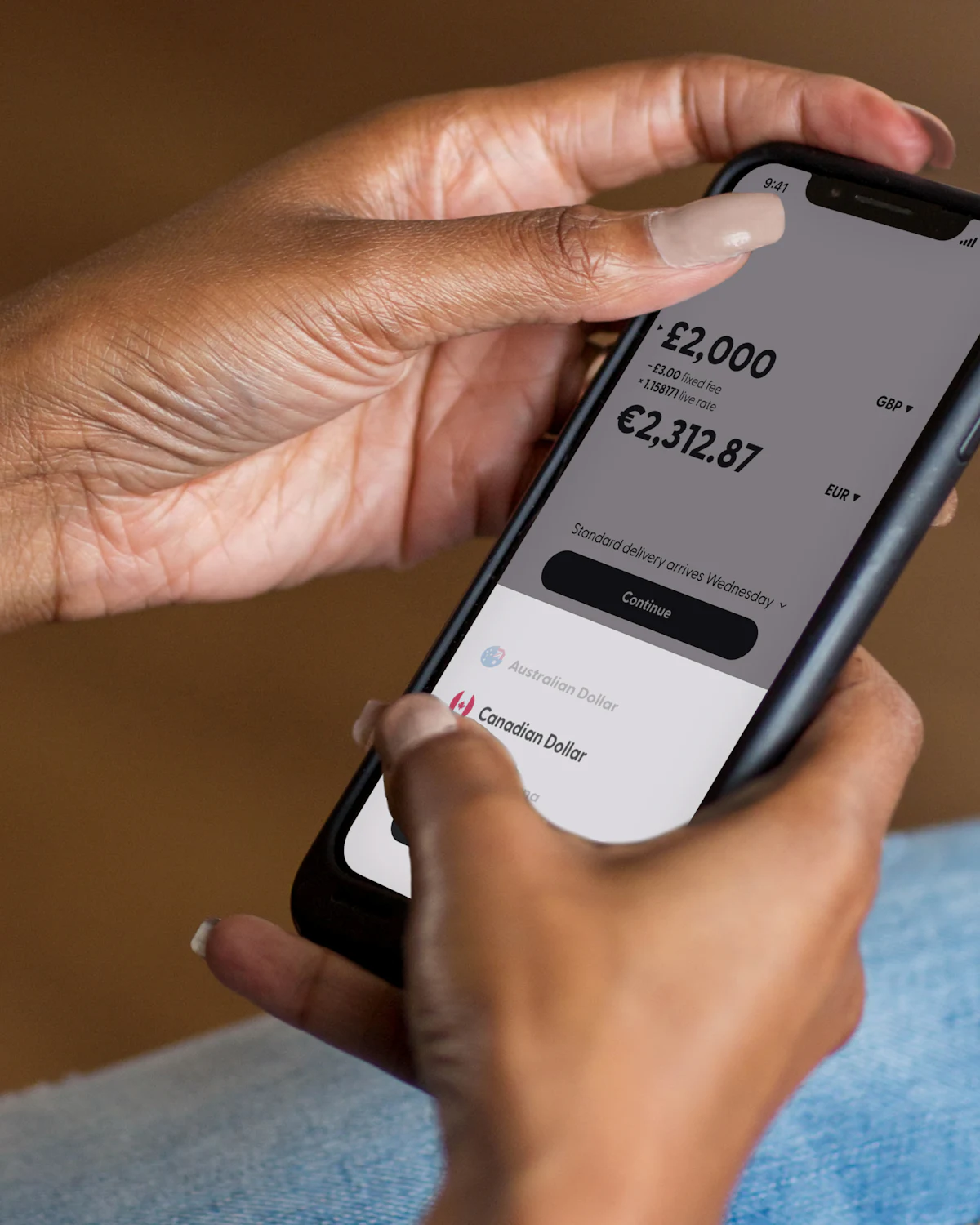
Sending money from a phone
1
Which corridor?

2
How should it arrive?

For reference: the global average

Globally, sending remittances costs an average of 6.36 percent of the amount sent. That is a worldwide average across all corridors and all providers, not a figure for any one corridor on this page. Source: World Bank — Remittance Prices Worldwide, September 2025 report (Q3 2025 data); read 2026-10-01.

3

Compare the quotes you were given

Open two or three of the providers above, ask for a quote on your amount and delivery method, and type in what each one offers. Nothing below is pre-filled — every number is yours.

Where to check: the mid-market rate is the one with no markup on it — look it up right before you send, from a source that is not selling you the transfer. Google Finance USD-INR

One row per quote — provider, the fixed fee they charge, and the rate they offered.

The arithmetic, in full

  • Amount converted = amount you are sending − fixed fee
  • Amount received = amount converted × rate they offered
  • Lost in the rate = amount converted × (mid-market rate − rate they offered) ÷ mid-market rate
  • Total cost = fixed fee + lost in the rate
  • Share of what you send = total cost ÷ amount you are sending × 100

How to compare quotes

Where the hidden cost lives: the FX markup

1. The visible fee

The fee shown at checkout. Providers compete loudly on this number — it's the one you see.

2. The exchange-rate markup

The gap between the mid-market rate (what Google shows) and the rate you're given. A 2% markup on $1,000 = $20, silently.

Provider profiles: who fits which situation
Speed, limits, and taxes

Speed.

Limits. Every app caps how much you can send in one transfer, and the cap differs by provider and by how far you have taken their identity verification — so check the current limit with the provider you plan to use before you count on it. If your amount is over their cap, the usual options are a higher verification tier, a different provider, or a bank wire.

Frequently asked questions

Q. Why don't you show live exchange rates?

A. Rates change minute to minute and any "live" number here would be stale by the time you send. The same is true of fees. So this page asks you for the quote each provider gives you and works out the total from those numbers — the figures are yours, read off the provider's own screen.

Q. Is the first-transfer promo worth it?

A. Compare the amount the recipient gets on the promotional transfer and on a standard one. A promotional rate may apply only to the first transfer, so the second can cost more.

Q. What's the cheapest funding method?

A. Compare the quote for each funding method. Many providers price card funding above a bank (ACH) transfer, and a credit card issuer may add cash-advance charges; the provider's quote shows the cost of the method you pick.

Q. Is it safe to use these apps for large amounts?

A. The major providers are licensed money transmitters regulated by FinCEN (and state regulators). For very large amounts, split verification-friendly chunks or use providers with high-limit tiers; keep records for both US and Indian tax purposes.

Sources and official references: 12 CFR 1005.31 (remittance disclosures); World Bank — Remittance Prices Worldwide; IRS — International individual tax FAQs. This page publishes no provider fee figures of its own. Provider pricing changes with the amount, the payment method and the moment you send, so get a quote from each provider you are considering and enter those quotes in the comparison above — the page does the arithmetic on the numbers you supply. The World Bank link is given for context: its landing page carries the global average cost of sending remittances, not per-provider pricing. This page is not financial advice, and final pricing is always the provider's own quote. Some links may be affiliate links (commission at no cost to you; the page ranks nothing on its own).

Privacy Policy

This site uses Google Analytics to understand how visitors use the comparison. Google Analytics collects anonymous traffic data using cookies. No personally identifiable information is collected. You can disable cookies in your browser settings.

This site displays ads served by third-party advertising networks (including Google AdSense). Ad providers may use cookies to show ads based on your interests. You can manage ad personalisation through Google's Ads Settings.

All values you enter are processed entirely in your browser. Nothing you type is transmitted to or stored on any server.

Messages sent through the "Report an issue" form are used solely to improve this site.

Disclaimer

Cost figures are typical-range estimates for comparison purposes, not live quotes. Actual fees and exchange rates are set by each provider at the time of transfer.

This site is independent and not affiliated with any provider mentioned. Rankings are computed from the estimated total-cost formula shown, never from commercial relationships.

Some links on this site may be affiliate links. If you use them, we may earn a commission at no extra cost to you.

The operator of this site accepts no liability for decisions made based on the information provided here. This is not financial advice.

About / Contact

This is an independent, individually-operated tool built to show the true total cost of USA→India transfers — the fee, plus the FX markup built into the exchange rate.

Pricing assumptions are reviewed quarterly. Spotted a change? Use the "Report an issue" button — reports directly trigger reviews.

Related tools

This page covers three corridors in one calculator: USA → India, Canada → India, and USA → Philippines. Related tools:

Report an issue

Report an issue

Provider pricing changed? Numbers look off? Every report triggers a review.

✓ Sent. Thank you.